A report on the PRAYTICIPATE and PCPSce Interaction Meeting
Ghent University Library · 17–18 September 2026 · Carolin Gluchowski
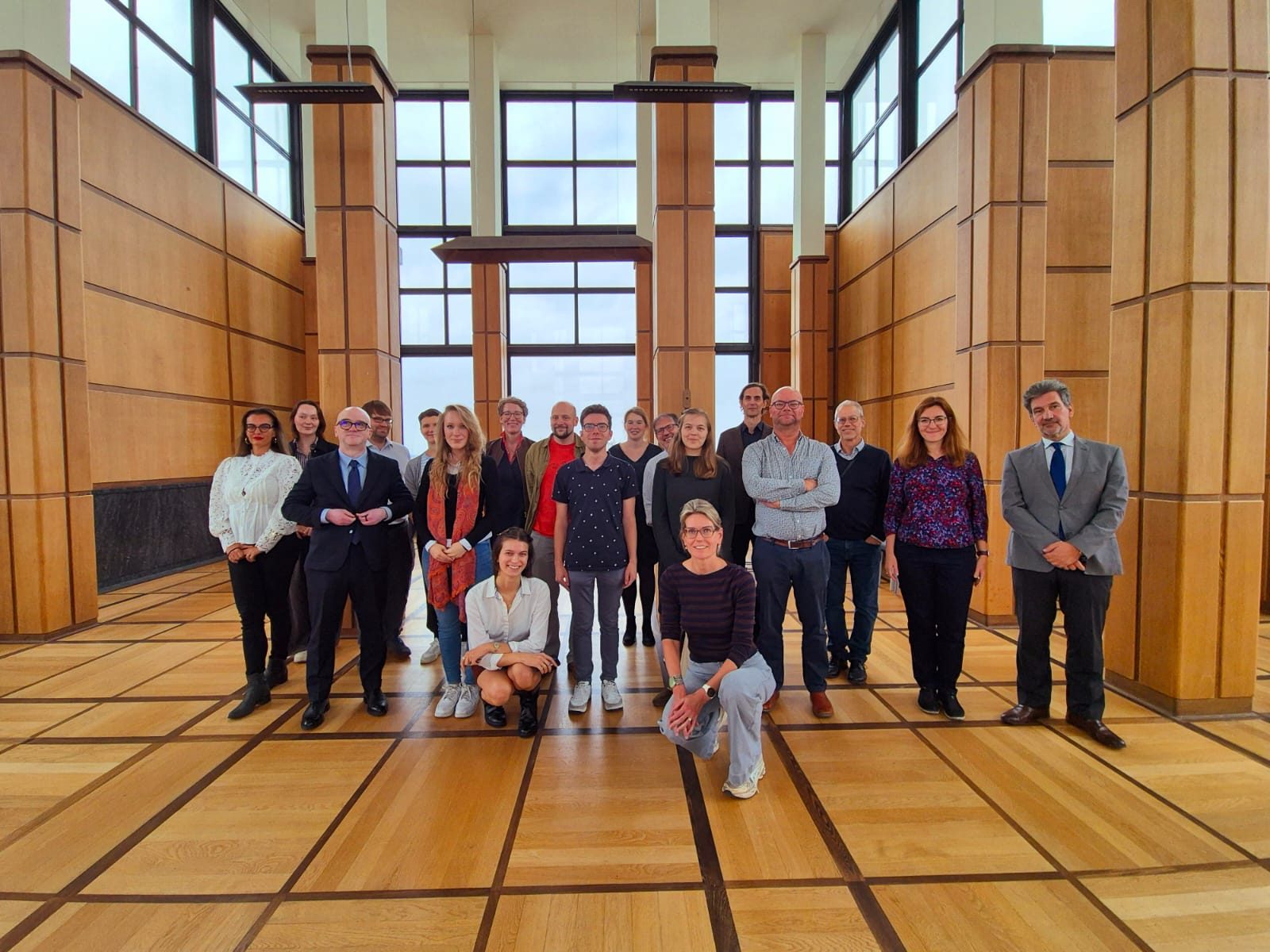
On 17–18 September 2026, researchers from the COST Actions PRAYTICIPATE and PCPSce met at Ghent University Library’s Boekentoren to ask what becomes visible when the histories of prayer and print are studied together. Across six papers, participants followed texts, images, and music through workshops, presses, religious communities, and libraries. The cases revealed that making an object available did not settle how it would be used: readers assembled books, altered images, translated prayers, and sometimes preserved older writing by putting it to entirely new purposes. The meeting gave both Actions a set of shared research questions and, on Friday, a chance to turn those questions into plans for cooperation during their current lifetimes.
Hosted by Youri Desplenter, Chair of PRAYTICIPATE, the meeting opened with welcomes from Desplenter and Mona Garloff, Chair of PCPSce. PRAYTICIPATE studies prayer as a participatory practice, attending to material forms, social connections, and sensory experience. PCPSce investigates print culture and its relations to different public spheres in Central Europe, including the production, circulation, and reception of texts and images. Their interests meet wherever a text or image moves between makers and users. Ghent made it possible to examine that movement across genres and across the conventional boundary between manuscript and print.
Making and remaking devotional books
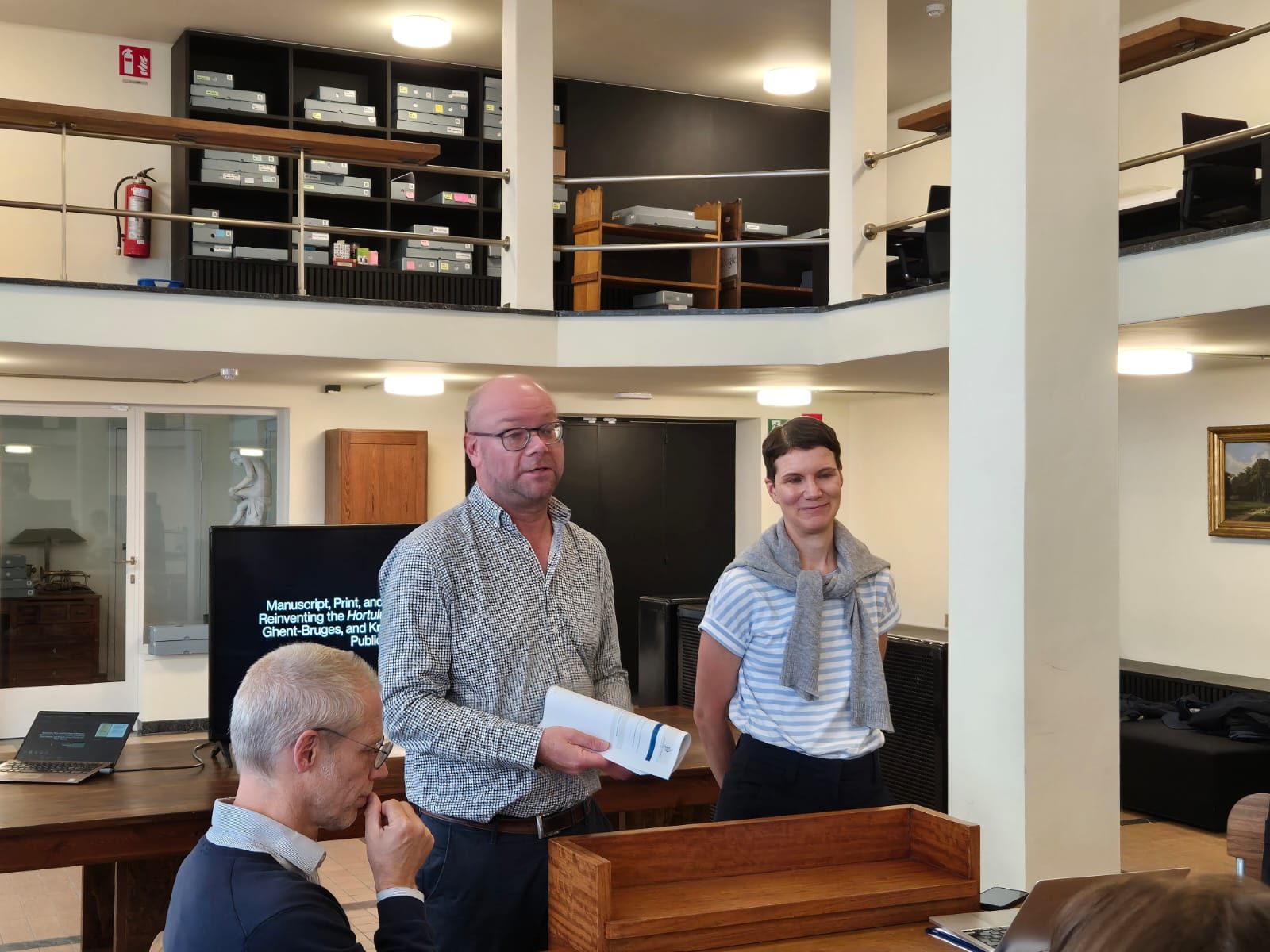
Stefaniia Demchuk opened the Thursday sessions with three versions of the Hortulus animae, or “Garden of the Soul”, produced around 1500. A lavish manuscript associated with the Ghent-Bruges milieu transformed a reproducible vernacular prayer book into a singular commission through its size, parchment, and illumination. A Latin edition printed in Strasbourg in 1509 combined standardised text and woodcuts with opportunities for hand-colouring, manuscript additions, and marks of ownership. The Polish Raj duszny, printed in Kraków in 1513, borrowed the recognisable identity of the Hortulus while drawing on several textual traditions for a different readership. The name of a book could travel even when its contents, language, and appearance changed. Demchuk’s comparison gave the Actions a common problem. PCPSce asks how books were produced, marketed, and circulated; PRAYTICIPATE asks how their arrangement and visual cues shaped devotional possibilities. In the Hortulus tradition, these questions cannot be separated: adaptation for a new market also offered readers different ways of finding, seeing, and using prayers. Equally, printed books could acquire individual features, while a costly manuscript could rework a printed model. The examples unsettled any easy equation of manuscript with private prayer or print with an undifferentiated public.
Carolin Gluchowski pursued these questions in the books associated with the Cistercian convent of Medingen near Lüneburg. A volume now in Göttingen binds a Middle Low German printed life and death of St Jerome, produced in Lübeck in 1484, to a handwritten section probably copied at Medingen in the late fifteenth century. Its manuscript texts on religious life and preparation for death gave the printed work a place in a deliberately assembled devotional sequence. The journey from an urban press to a convent did not end with acquisition: selection, copying, binding, and communal use all contributed to the book’s meaning. Gluchowski’s second case, an Easter prayer book now in Hannover, shows a different use of print. Figures cut from an unidentified printed source were pasted into some margins and integrated into drawn, coloured, and gilded scenes. Other images in the same book were made entirely by hand, including an illumination on page 114 in which a kneeling nun faces the risen Christ. The distinction helps us see selection at work: Medingen’s makers used printed images where they served the book’s visual and devotional programme and created new ones where they did not. For PRAYTICIPATE, the pages show how a book could guide engagement with Easter through words, images, and handling. For PCPSce, they show that the history of a print continues after it leaves the press, sometimes even after it is cut apart. Religious women emerge here as makers and editors of media, not simply as their audience.
Images and sound across different audiences
Ivana Čapeta Rakić shifted the discussion from individual books to the developing visual language of the Rosary. Beginning with confraternities in Cologne and Venice, she followed images through Alberto da Castello’s illustrated Rosario della gloriosa Vergine Maria, first printed in Venice in 1521, later editions, individual prints, and paintings. Prints by Nicolas Beatrizet and Giovanni Battista Cavalieri offered formulations of the Madonna of the Rosary; an engraved frontispiece by Adamo Scultori for a Rosary book drawn from Luis de Granada’s writings reworked related motifs and, in turn, informed later editions of Da Castello’s book. Rather than a single image passing unchanged from one medium to another, the paper traced a repertoire made recognisable through repeated adaptation. That process concerns both the forms in which prayer became imaginable and the means by which images travelled. PRAYTICIPATE’s attention to devotional images and confraternities helps explain why a shared repertoire mattered to worshippers; PCPSce’s attention to printmakers, editions, and circulation shows how it could be sustained across places and audiences. Čapeta Rakić’s paper also warned against treating a familiar image as evidence of uniform practice. The connections among printers, painters, confraternities, and viewers need to be reconstructed, rather than assumed from visual similarity alone.
Vassilis Vavoulis then asked why music entered print along paths that differed from those of text-based genres. Early music printing required demanding techniques, and Ottaviano Petrucci’s Harmonice Musices Odhecaton of 1501 marked an important stage in their development. Yet technical possibility was only part of the explanation. Printed music required purchasers with particular skills and interests, and the market for one genre could differ sharply from that for another. Some genres appeared in print far later than others. His paper made PCPSce’s account of public spheres more precise: the potential to reproduce an item did not itself create an audience able or willing to buy and use it. It also opened a productive question for PRAYTICIPATE’s work on music and the senses. What can a printed score tell us about practices also learned by hearing, remembering, and performing? Vavoulis did not present a case study of prayer music; the comparison helped identify what evidence a history of sounded devotion would require.
What a book can become
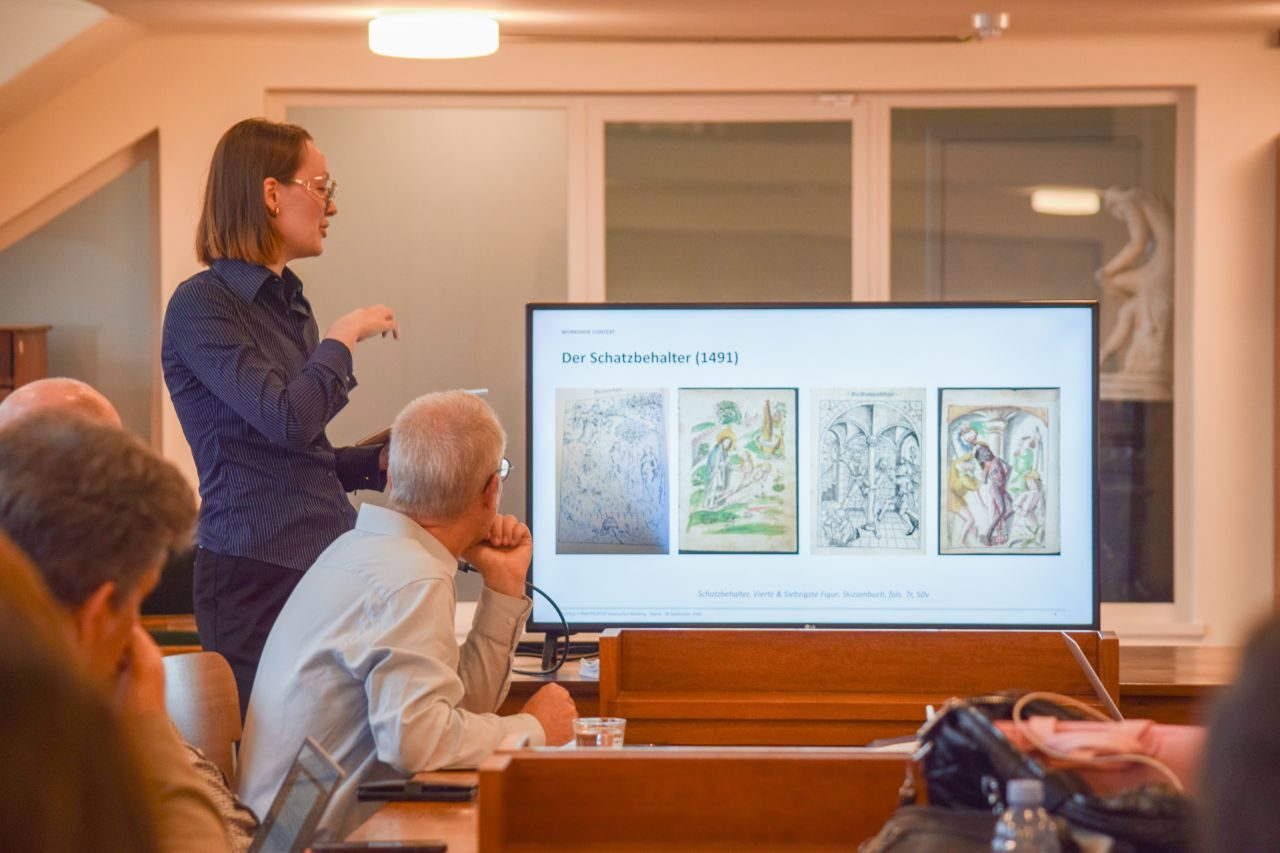
The Friday papers approached the same problems through objects whose later lives challenge the names and functions commonly assigned to them. Louise Keitsch’s “Different Books with Different Uses? Naming, Affordances, and the Devotional Reuse of the So-Called Sketchbook of Michael Wolgemut” asked how the label “sketchbook” shapes what scholars expect to find. Considering the object’s devotional reuse brings practices of looking and handling into view alongside any role it may have had as a source of artistic models. For PRAYTICIPATE, the question is how an image-bearing object could become part of prayer; for PCPSce, it provides a methodological comparison for studying changes in a book’s purpose and audience over time. The point is not to settle its function from a modern label, but to examine the traces of use that the object itself preserves.
Jens De Rijbel introduced a previously unknown Middle Dutch fragment of the Miracles of the Holy Cross in Ghent University Library. It survives as reused binding material in a sixteenth-century printed tract on trade weights and measures. The fragment’s miracle narratives repeatedly connect affliction, a vow, a cure, and a votive gift. By examining its parchment, script, and format alongside comparable miracle records, De Rijbel considered its original setting and the possibility that it had served a public or administrative purpose. The evidence does not end with its first use: its conversion into binding material and eventual preservation in a library are part of its history too. De Rijbel’s case joined the Actions’ questions in a single object. The miracle accounts speak to PRAYTICIPATE’s interest in prayer, vows, and the communities in which devotional acts were recorded. Their physical survival inside a printed volume speaks to PCPSce’s study of how books were made and how older materials entered the economies of print. Together with Keitsch’s paper, it showed why later uses should be investigated as carefully as intended ones. A fragment can testify both to a devotional practice and to the material decisions that made its testimony available to us.
From shared questions to joint work
Taken together, the six papers offered more than examples of a familiar transition from manuscript to print. Demchuk and Gluchowski showed how printers, owners, and convent communities remade devotional books; Čapeta Rakić followed visual models as they changed across media; Vavoulis examined the skills and markets that limited the spread of printed music; Keitsch and De Rijbel read later uses from the surviving objects themselves. A recurring question was how to connect the capacity of media to circulate with evidence for what particular people actually did with them. Another was how to reconstruct audiences without treating “private” and “public” as fixed properties of an object.
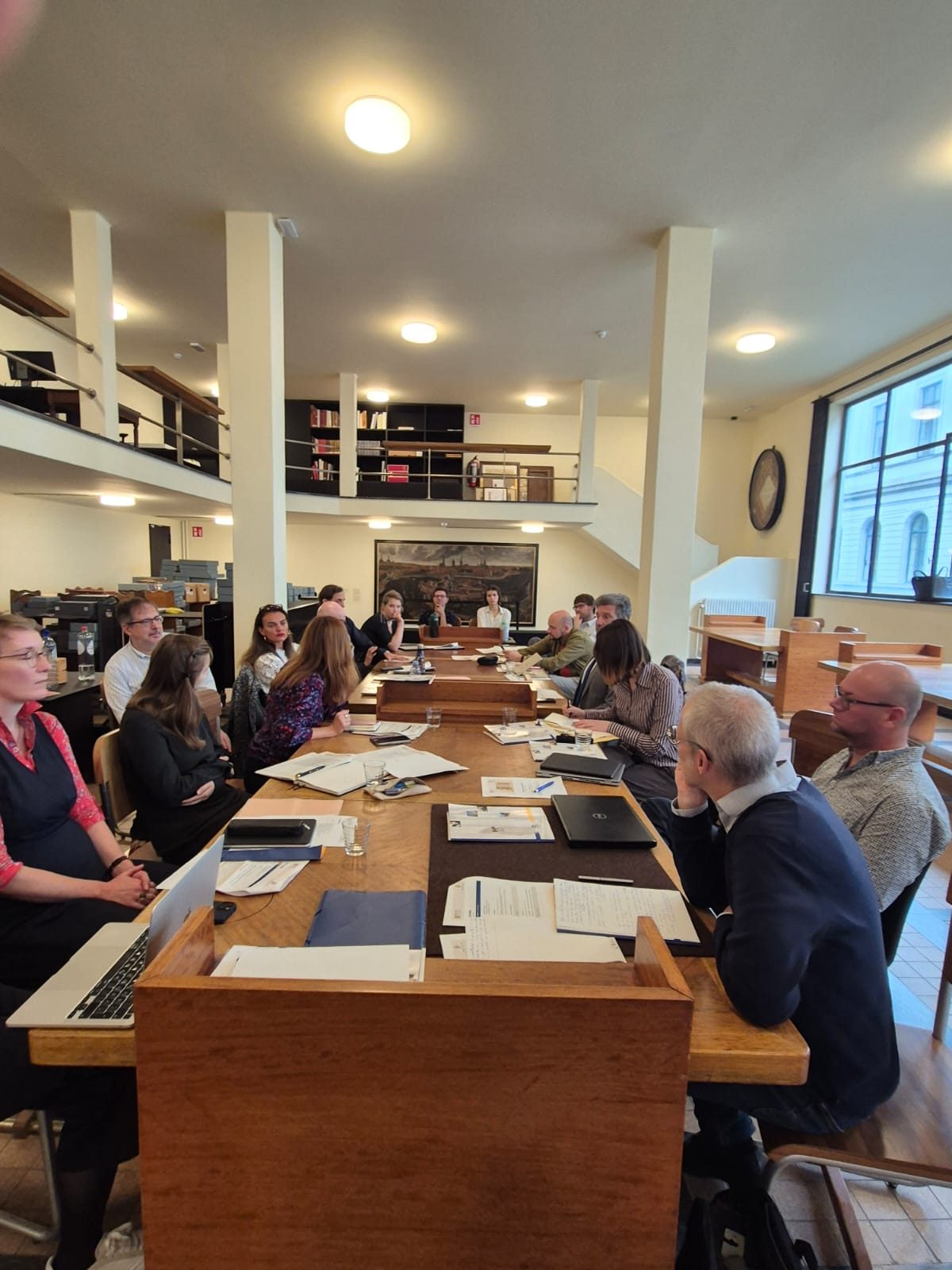
These questions gave the Friday conversation a clear direction. Participants discussed the continuing interaction of handwritten and printed materials and to the need for a more systematic account of what such interactions reveal. PRAYTICIPATE can bring close analysis of devotional activity, including visual and sensory practices, to these questions. PCPSce can situate those activities within the changing conditions of production, markets, and public communication. Their different chronological emphases invite comparisons across the late medieval and early modern periods. The discussion identified a practical first step: participants also considered exchanging invitations to relevant events, developing panels for other conferences, and holding a larger joint meeting later in the Actions’ lifetimes. These ideas give the exchange in Ghent a route forward. A sustained conversation about printed prayer books, manuscript and print reuse, and the audiences for devotional media could grow from the work the two Actions are already doing.
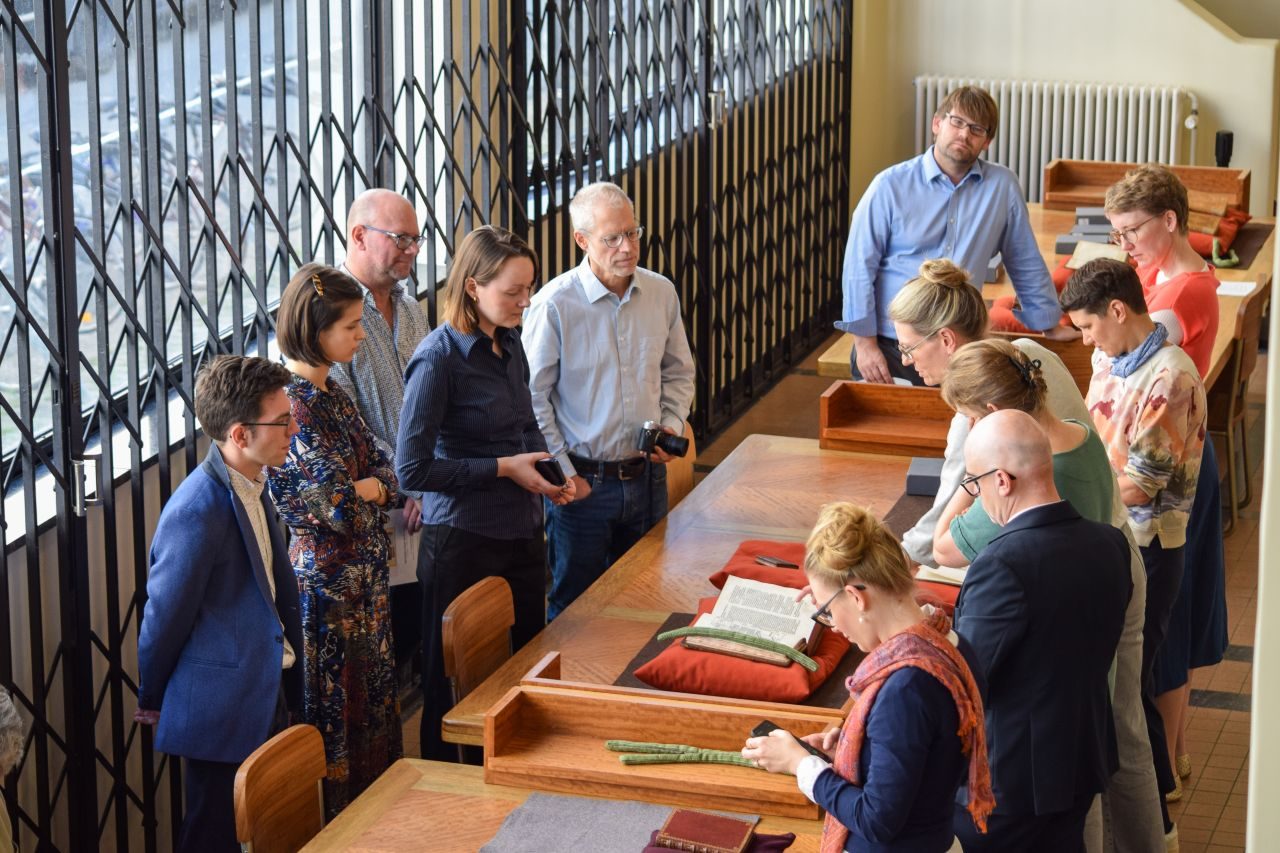
A guided tour of the Boekentoren on Thursday and a presentation of treasures of early modern printing from Ghent University Library on Friday kept the discussion close to the collections that make this research possible. We thank Youri Desplenter and our colleagues in Ghent for hosting the meeting, and all the speakers and participants for their generous exchange. The value of bringing PRAYTICIPATE and PCPSce together lay in the questions that each could sharpen for the other—and in the concrete opportunities to pursue them together now.