
Space, Place, Movement, Ritual, Service and Text: a participatory pilgrimage-and-prayer-immersion research skills-sharing event, hosted by prof. Konstantinos Giakoumis & dr Joana Dhiamandi (LOGOS University College, Tirana)
A report on the Working Group 3 “Prayer and Setting” event
Albania · June 23rd – 25th, 2026 · Jelena Erdeljan & Konstantinos Giakoumis
Prayer is not merely an individual act of devotion, but a communal practice shaped and enriched by its environment – whether tangible or intangible, natural or man-made. From the space, place and architecture that enfolds a congregation to the rituals, liturgical movements, texts and services that structure devotion, every element contributes to an immersive, multisensory experience of prayer. A close, contextual reading of space, place, movement, ritual, service and text, as contributing factors to a synaesthetic perception and experience of prayer and, in particular, prayer as part of pilgrimage, is therefore essential to capture the plurality and dynamism of prayer across late medieval and early modern faith traditions.
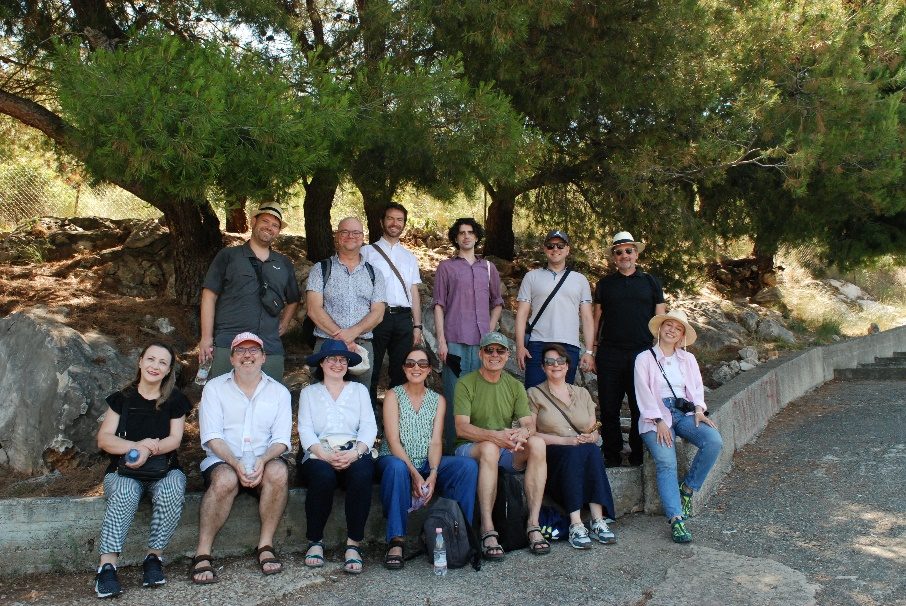
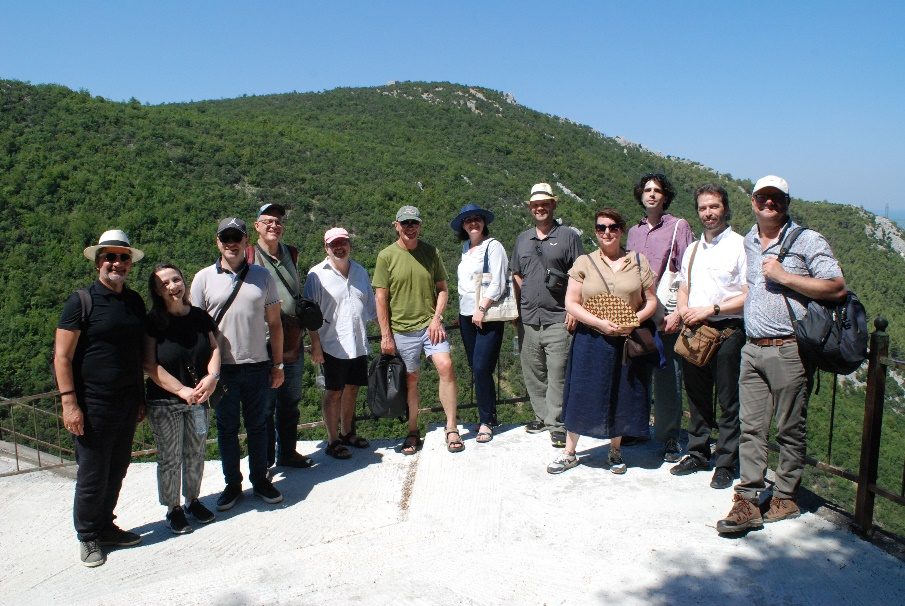
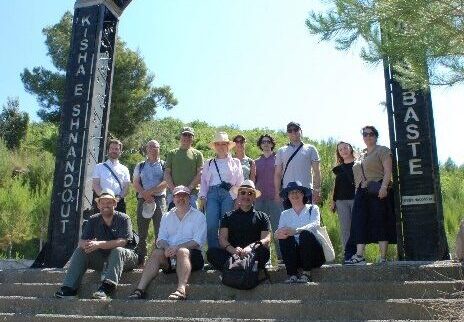
In this context, WG3 members, hosted by LOGOS University College, met in Albania from June 23rd to 25th with the aim of focusing on how material and immaterial contexts frame and inform communal and individual prayer. The intense and inspiring program of this research skills-sharing event brought together scholars working on various aspects of experiencing pilgrimage in the late medieval and early modern era. The hands-on and fully immersive program of this research skills-sharing event included visits, and veritable pilgrimage, to Christian and Islamic holy sites and monuments in Albania, including Orthodox, Catholic, Suni and Bektashi holy places in Laç, Krujë, Berat, and Tirana.
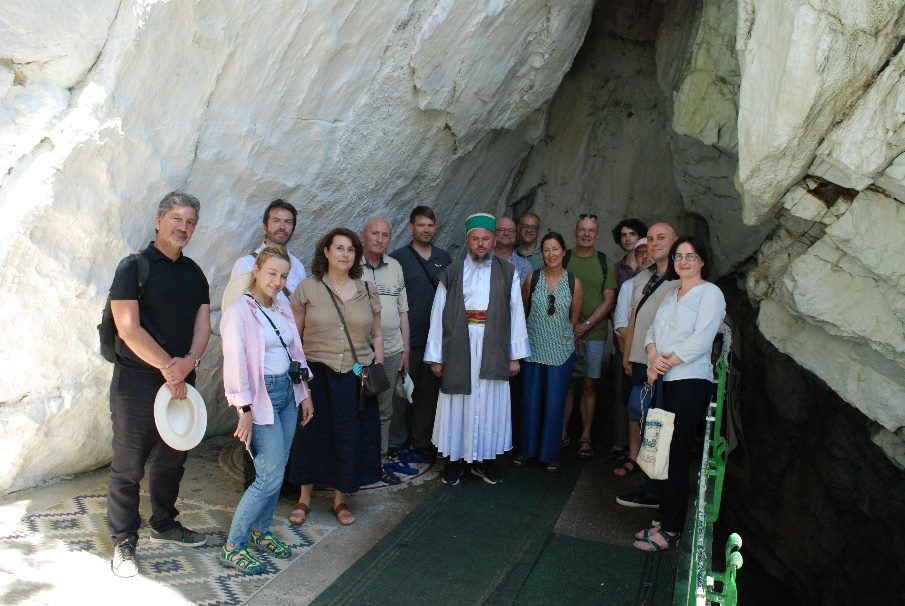
The climb up the mountain towards the cave and sanctuary where the cults of St. Blaise and St. Anthony of Padova are venerated, with the path lined with traces of candles as testimony of ongoing contemporary pilgrimage to this site by both Christians and Muslims, the descent to the cave and the well of Sari Saltik and the visit to the Bektashi tekke formed around this holy place above the clouds and the ancient city of Krujë, were of incomparable effect in bringing the experience of the pilgrims closer to both the physical and mental, intellectual, and emotional experience of the researchers participating in this event.
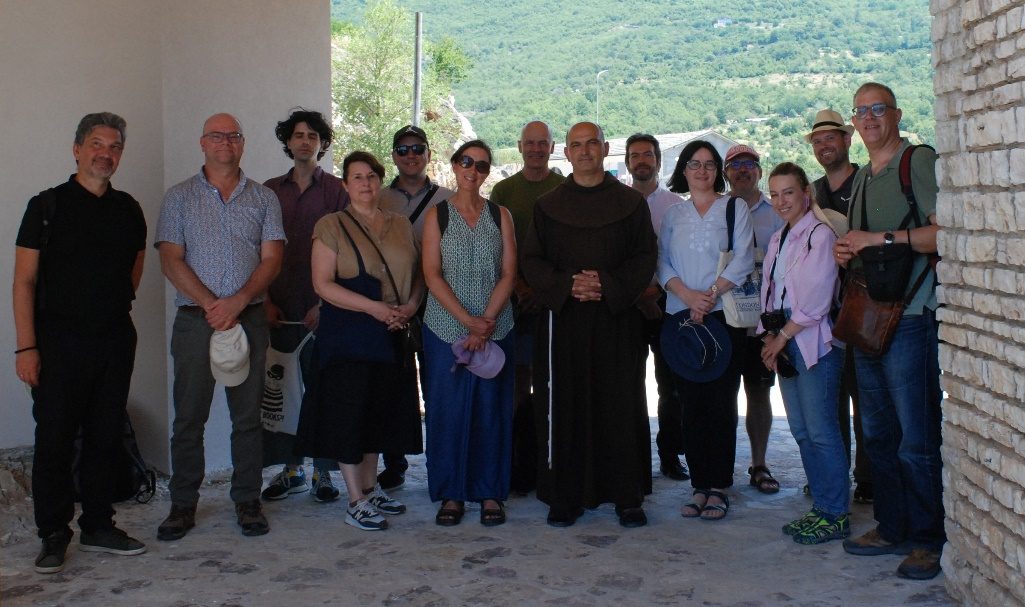
Equally significant and impressive was the visit to Berat and the privilege to witness the actual veneration of the holy relics of the apostles to the Slavs, Sts. Gorazd and Angelarios, in the presence and with the blessings of the H.E. Metropolitan Asti of Berat, as well as the visit to the holy site tied to the cult of the neo-martyr Nikodemos which also introduced into perspective the fate i.e. the destruction of holy places in the recent history of Albania under Enver Hoca.
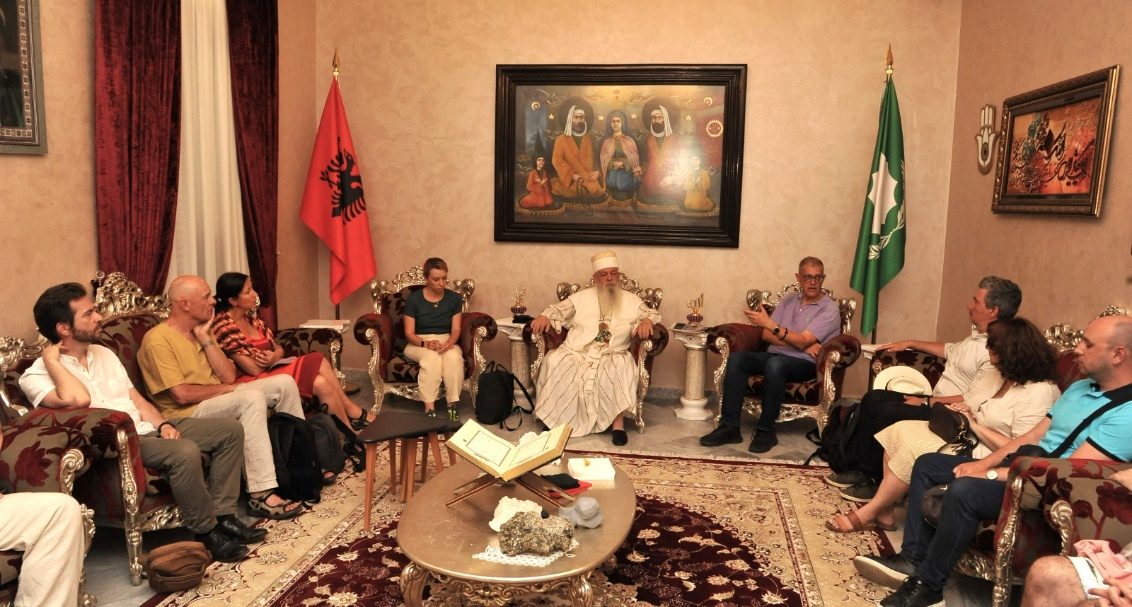
The overall immersive experience of pilgrimage was further expanded by visits to the Et’hem bey mosque as well as the Byzantine churches of Berat and enhanced by the in situ experience of the soundscape of these medieval sacral spaces. Finally, the visit to the World Bektashi Center in Tirana and audience with the head of Bektashi order Edmond Brahimaj, Baba Mondi, introduced the members of WG3 participating in this event to the sacred space, prayer practices and communal activities of the Bektashi order in Albania and the entire world through direct experience and an educational visit to the museum at the World Bektashi Center.
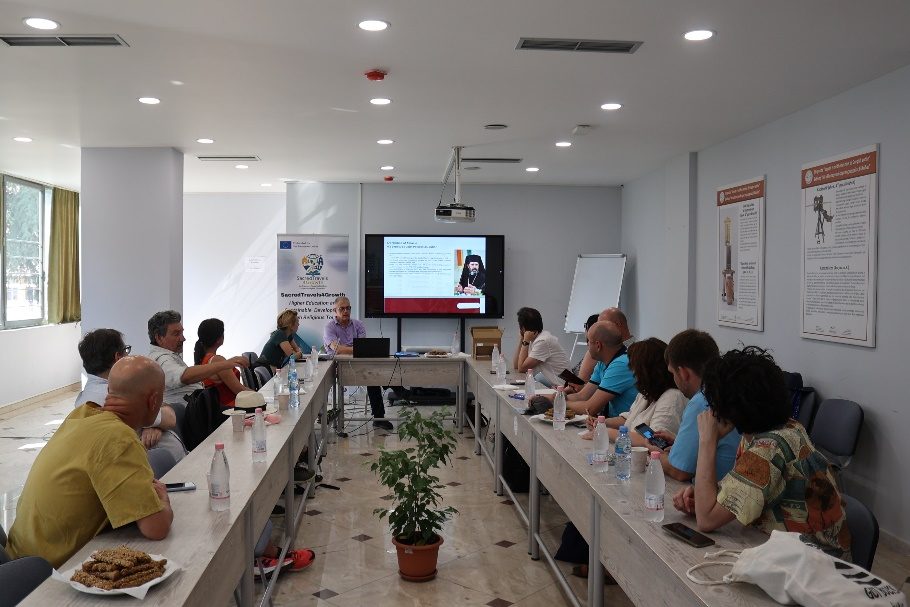
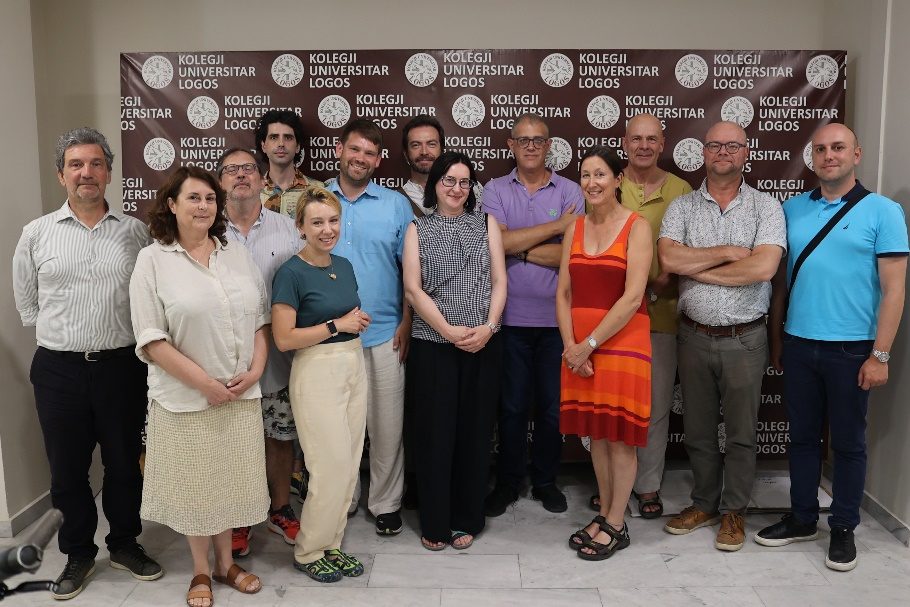
The closing remarks and discussion held on the last day of the event at LOGOS University College wrapped up and examined further possibilities of investigating the questions set forth in the agenda of this research skills-sharing event:
- Are there certain elements of prayer and setting so deeply ingrained in human perception that modern, immersive experiences like ours can genuinely help us understand late medieval and early modern prayer experiences?
- In what ways do space, place and movement condition or actively reshape prayer practices?
- How do space, place, and movement impact the physical ways in which rituals, services, and texts are embodied during prayer?
Further reading
Elsie, Robert, “The Christian Saints of Albania”, Balkanistica 13 (2000): 35-57. Link
Giakoumis, Konstantinos. 2014. “From Religious to Secular and Back Again: Christian Pilgrimage Space in Albania.” In Pilgrimage, Politics and Place-Making in Eastern Europe: Crossing the Borders, edited by John Eade and Mario Katić, 103-18. London: Ashgate. Link.
Giakoumis, Konstantinos. 2023. “Pilgrimage Diffusion and Polycentrism in the Veneration of Saint Nicodemus of Berat.” In Pilgrimage in the Christian Balkan World: The Path to Touch the Sacred and Holy, edited by Dorina Dragnea, Emmanouil Ger. Varvounis, Evelyn ReuterPetko Hristov and Susan Sorek, 69-90. Turnhout: Brepols. DOI: 10.1484/M.STR-EB.5.132400. Link.