
A report on the PRAYTICIPATE Summer Training School “The Story of Prayer: Giving GREAT Academic Presentations”
University of St Andrews and the Burrell Collection · 18–20 June 2025 · Louise Keitsch
How can researchers give an audience a way into specialised work on the past? At PRAYTICIPATE’s first training school, participants explored this question through one-minute research pitches, presentations of their own work and gallery talks in front of medieval objects. Held at the University of St Andrews from 18 to 20 June 2025, “The Story of Prayer: Giving GREAT Academic Presentations” brought together 25 young researchers and innovators (YRIs) from at least ten countries, joined by Master’s and PhD students from the host university.
Organised and led by Professor Kathryn M. Rudy (St Andrews), with contributions from senior Action members and colleagues in St Andrews, the school treated presenting as a skill that can be learned through preparation, practice and feedback. Academic storytelling and participatory presentation connected PRAYTICIPATE’s study of prayer with the question of how to invite audiences into a discussion of research. Bringing researchers at different career stages together also made the school a forum for exchange and professional development. Its aim was to strengthen skills that support YRIs’ employability while helping them build supportive networks for their future careers.
Reaching an audience and speaking with confidence
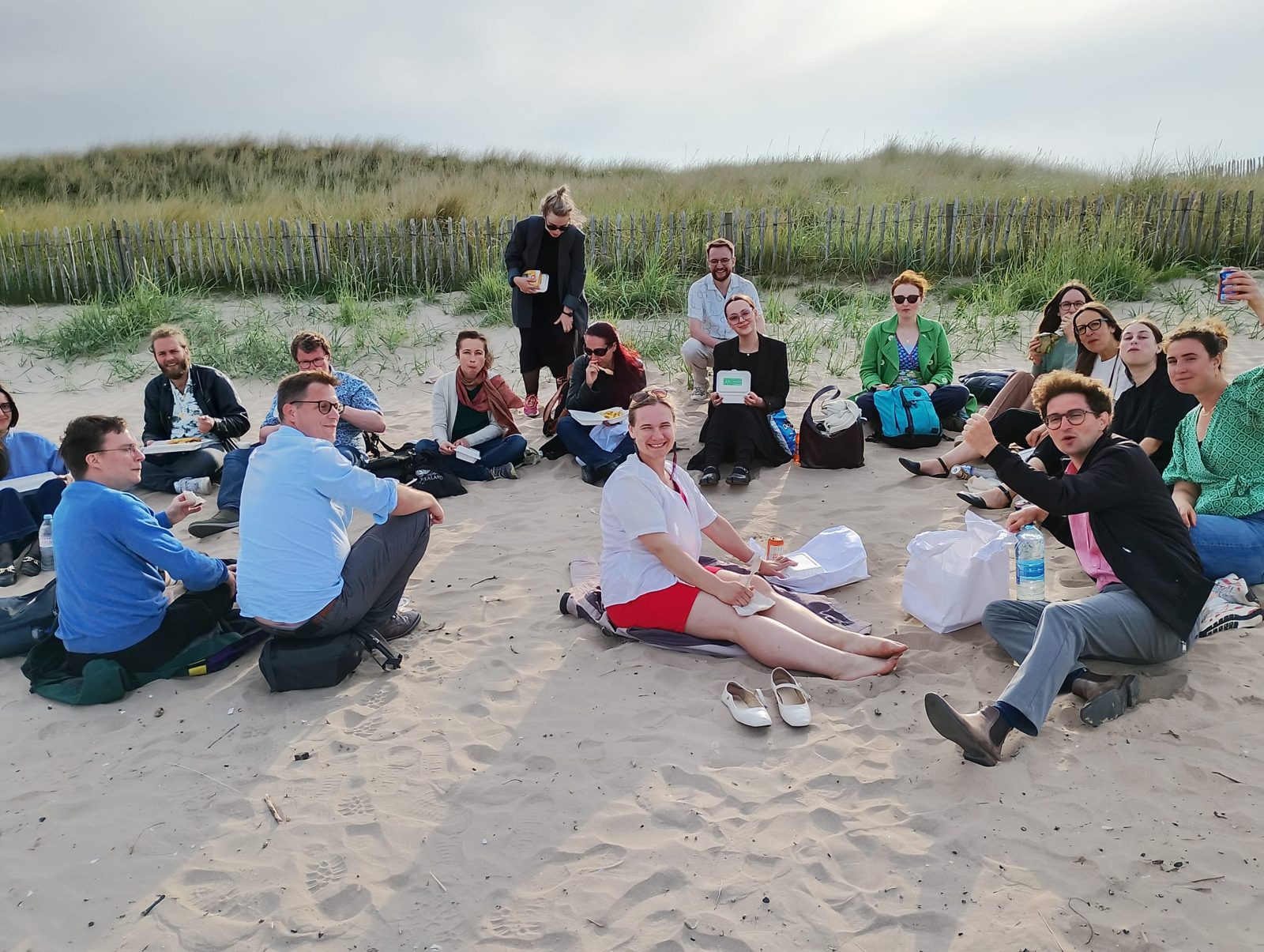
An opening lecture on the evening of 17 June set the wider context. In “Presenting the Middle Ages”, Professor Robert Bartlett discussed communicating specialised medieval history to non-academic audiences in documentary form. A welcome reception and dinner by the beach gave participants an opportunity to get to know one another before the practical training began. Such encounters are part of PRAYTICIPATE’s commitment to helping YRIs establish networks through which they can exchange advice, support one another in navigating academic life and develop sustainable careers.
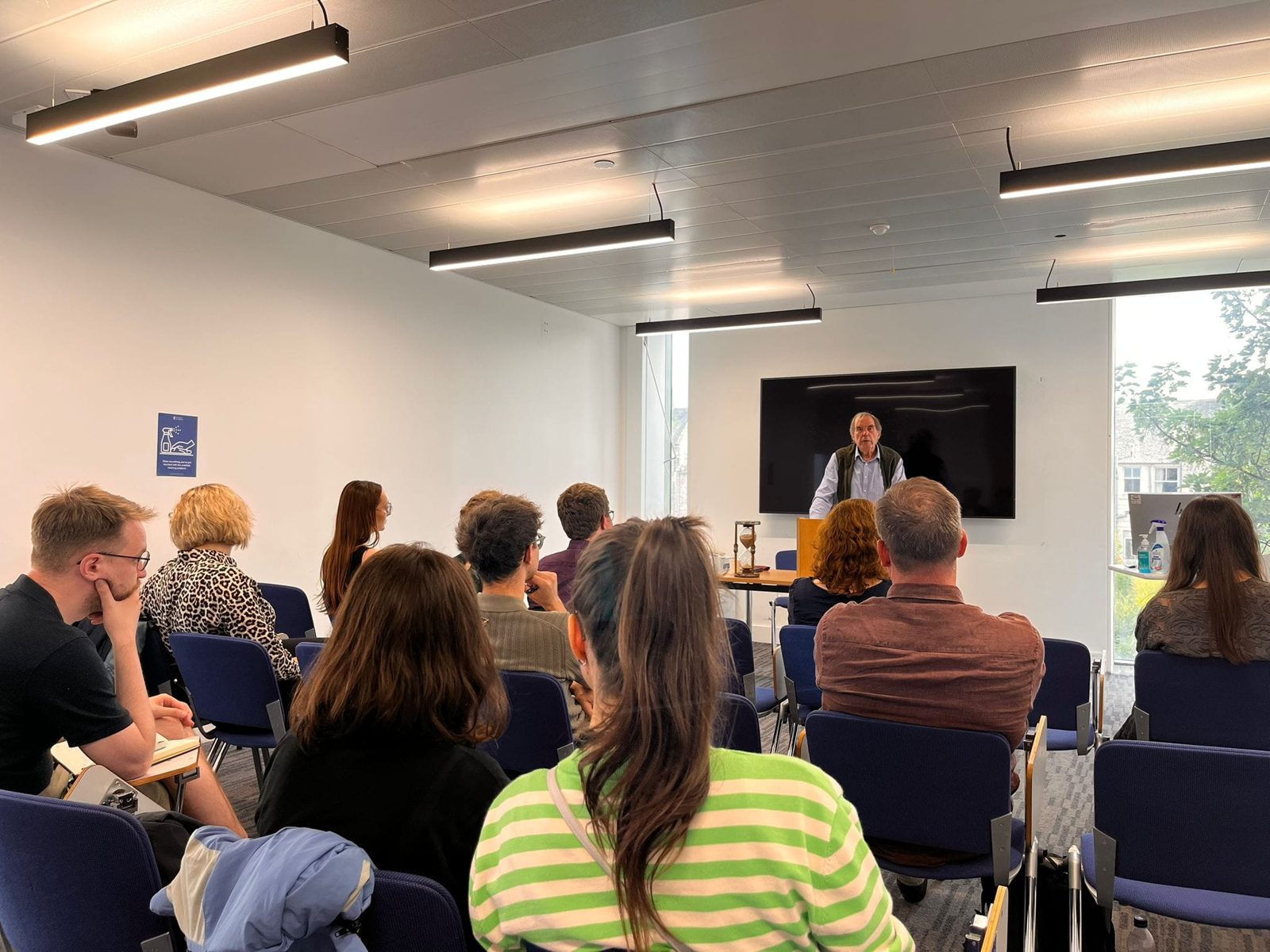
Wednesday’s sessions, on 18 June, focused on delivery and preparation. Presenting on a large stage can be daunting, particularly early in an academic career. Rudy and senior Action members worked with participants on maintaining their natural style under pressure, establishing rapport and directing an audience’s attention. Eye contact and the effects of stress and adrenaline were considered alongside ways of speaking clearly and confidently.
The exchange between YRIs and more experienced scholars also addressed the different presentation formats researchers encounter throughout their careers. Choosing an appropriate format was hence itself identified as an important skill: a brief introduction to a new colleague requires different decisions from a conference paper or gallery talk. Participants practised a one-minute elevator pitch, introducing themselves and their research in concise, information-rich sentences. The exercise required them to identify what a listener needed to know first and how to explain the significance of their work within a short exchange.
The afternoon extended this work through a practical toolkit for preparation, covering prompts, scripts and time management. An evening Pecha Kucha demonstration and film screening offered further opportunities to consider how different formats shape the presentation of information.
Building an argument and responding to questions
On Thursday, 19 June, attention turned to the structure of a research talk, preparing participants for the presentations they would give later that day. The morning training addressed how to understand an audience, organise a story around its key issues and evidence, and give a talk a clear beginning and ending.
Responding to questions was central to this work. Researchers need to explain and defend their interpretations under pressure, sometimes in exchanges that feel uncomfortable or challenging. The training addressed the preparation and composure needed to navigate these situations and keep the discussion focused on the research. For YRIs approaching major international conferences, this was an important connection between developing a presentation and being ready to discuss its argument with others.
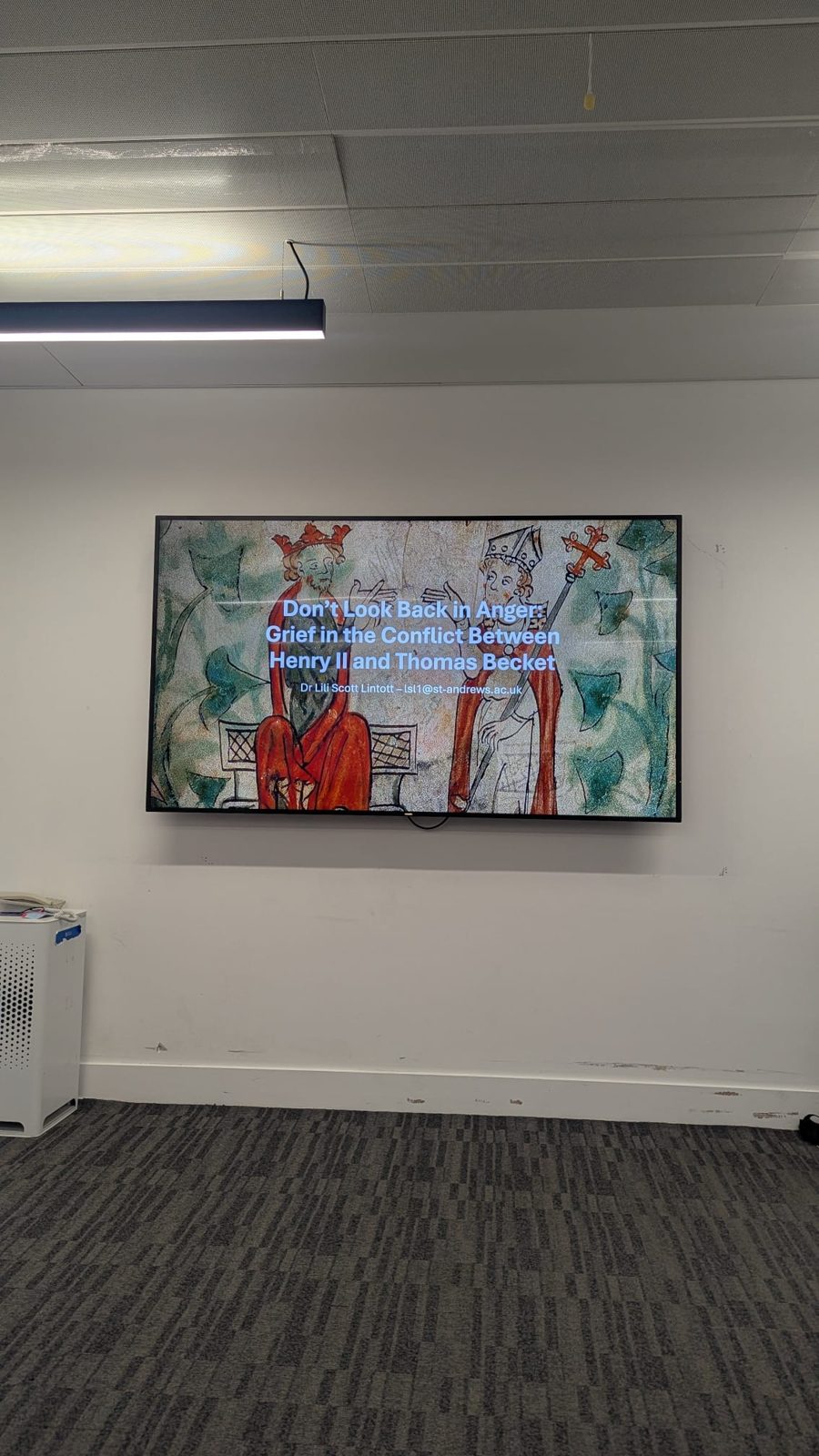
Dr Lili Scott Lintott of the University of St Andrews presented “Don’t Look Back in Anger: Grief in the Conflict Between Henry II and Thomas Becket”. Her talk provided a positive model of a research presentation. Listening to a complete talk gave participants a shared reference point for considering how structure and delivery work together to guide an audience through a historical problem. It complemented advice on individual techniques with an opportunity to observe effective presentation in practice.
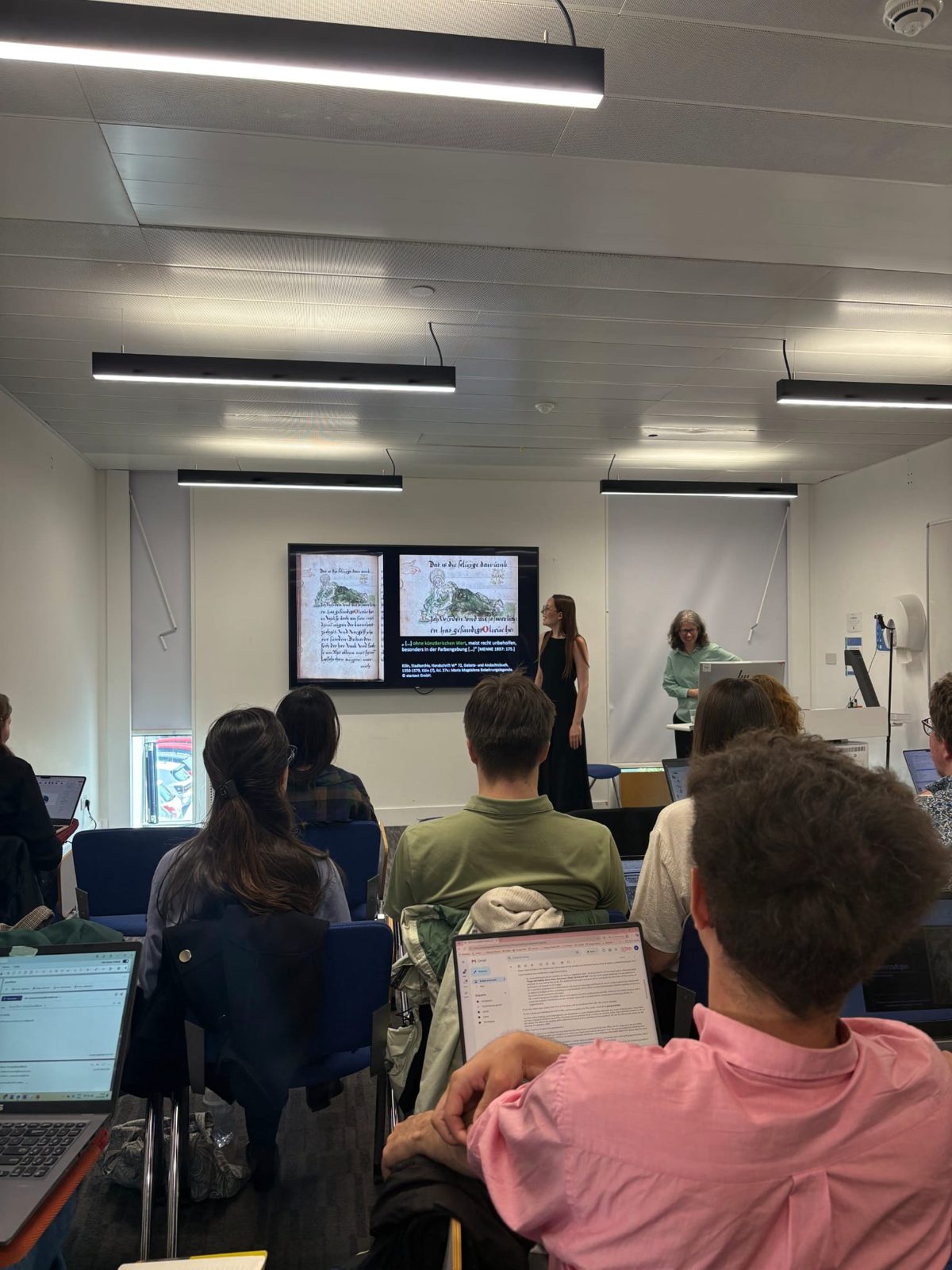
In the afternoon, Dr Julia Faiers led a session on visual aids. Participants explored how to select images that supported an argument, guide an audience’s interpretation of a slide and avoid distractions, alongside the graphic design of PowerPoint and Keynote presentations. For research on prayer, where manuscripts, images and objects often carry much of the evidence, these choices matter: listeners need to understand what they are being invited to examine and how it contributes to the argument.
Participants then presented their current research and refined their talks through feedback from trainers and peers. This final exercise brought the day’s training together, allowing them to apply the work on structure, delivery and visual communication to presentations they could continue developing after the school.
Presenting medieval objects in the gallery
On Friday, 20 June, the group travelled to the Burrell Collection in Glasgow. Each participant had prepared by selecting two objects made before 1550 and writing short notes about them. At the museum, the group divided into two, and participants gave short gallery talks in front of their chosen objects.
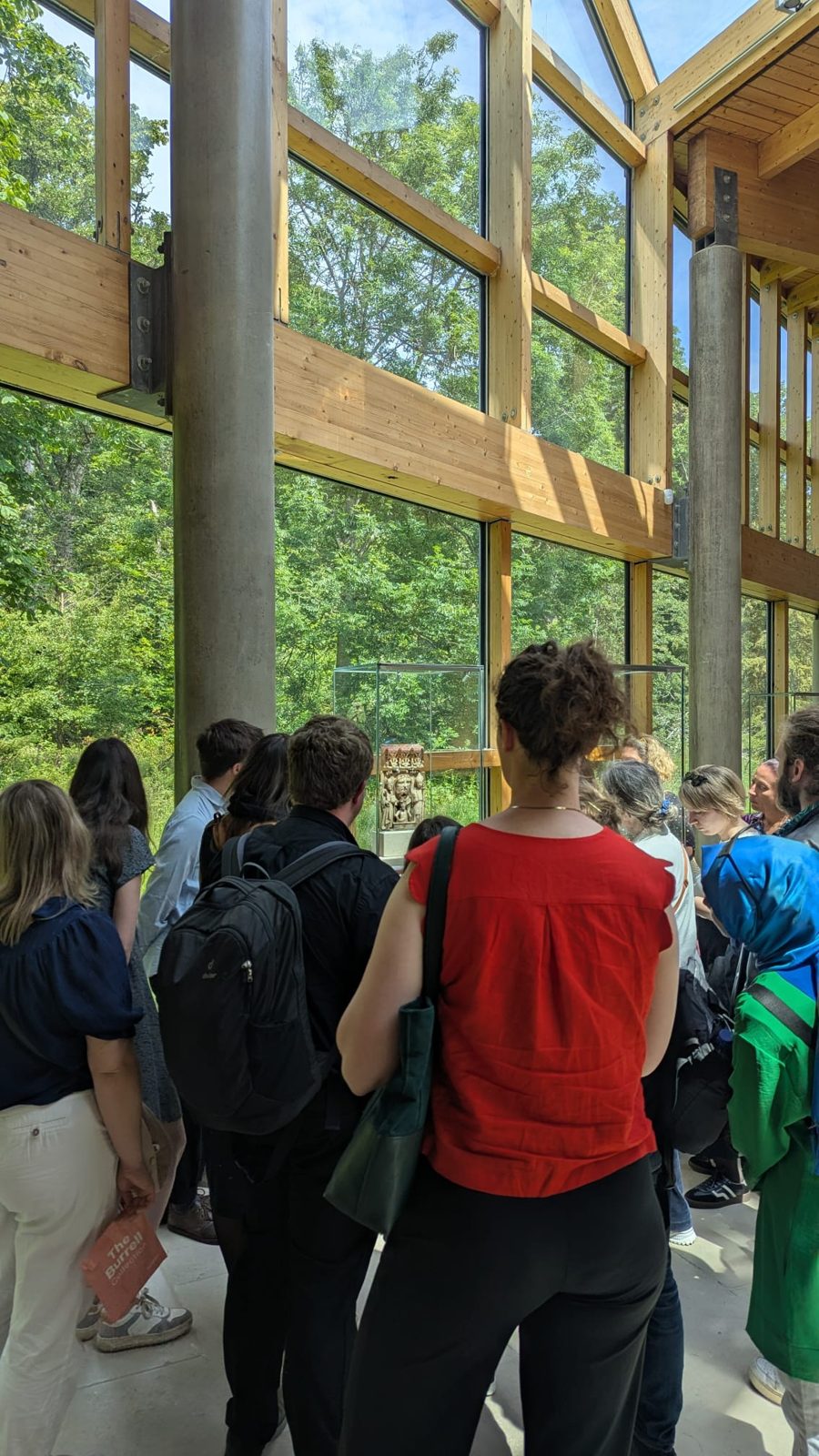
Teaching and presenting with objects requires practice in the setting in which an audience encounters them. The gallery exercise gave participants that opportunity: speakers and listeners could look at the same object while its relevant features were explained. It connected the training on attention and clarity with direct observation of material evidence, offering experience useful for teaching, museum interpretation and public engagement.
Shared practice and career development
Across the school, participants worked with their own research while learning from peers, senior Action members and colleagues in St Andrews. The programme gave them practical experience in several forms of presentation and opportunities to discuss challenges that extend beyond any single talk. Its contribution to career development lay in combining these skills with contacts across an international network. Continued exchanges of advice and feedback can help YRIs prepare for professional opportunities and support one another as their careers develop. We thank Kathryn M. Rudy and our colleagues at the University of St Andrews for organising and contributing to the school, and all trainers and participants for sharing their work, questions and feedback.