
A report on the Working Group 3 “Poetics of Prayer” workshop, organized and hosted by Dr Dominika Ruszkiewicz at IGNATIANUM University in Cracow
Cracow · 18–19 February 2026 · Dominika Ruszkiewicz
“Prayer texts are prototypically poetic in pragmatic and structural terms. But they are also more and less than that: more, because they are not only performative—like and as poetry—but are designed for total performance—a performance that, unlike the mere recitation of a role poem, is subject to the speech act’s felicity conditions of “seriousness,” faith, and identification with what is said, or—more technically—the identification of the speaker in the text with the speaker of the text. Less so, however, because this very structural-pragmatic commitment to the possibility of identificatory performance sets limits on the prayer text, including the requirement that it have recognizable semantics and a pragmatic structure appropriate to prayer.”
In the above words, prof. Marc Föcking (Univerity of Hamburg) captured the main idea underlying the workshop, namely to bring poetry and prayer into relation by exploring the language (rhetorical principles, conventions, etc.) and communicative situations of selected texts and by determining what they gain and lose when they are shaped as prayers.
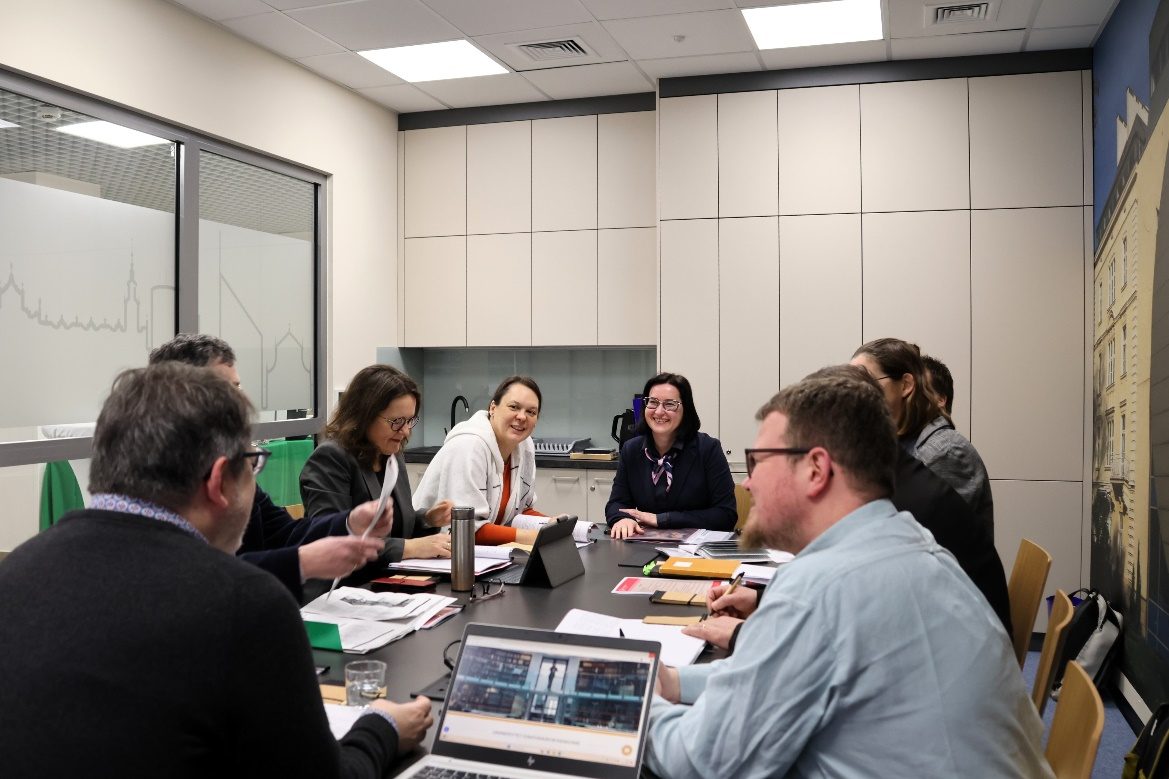
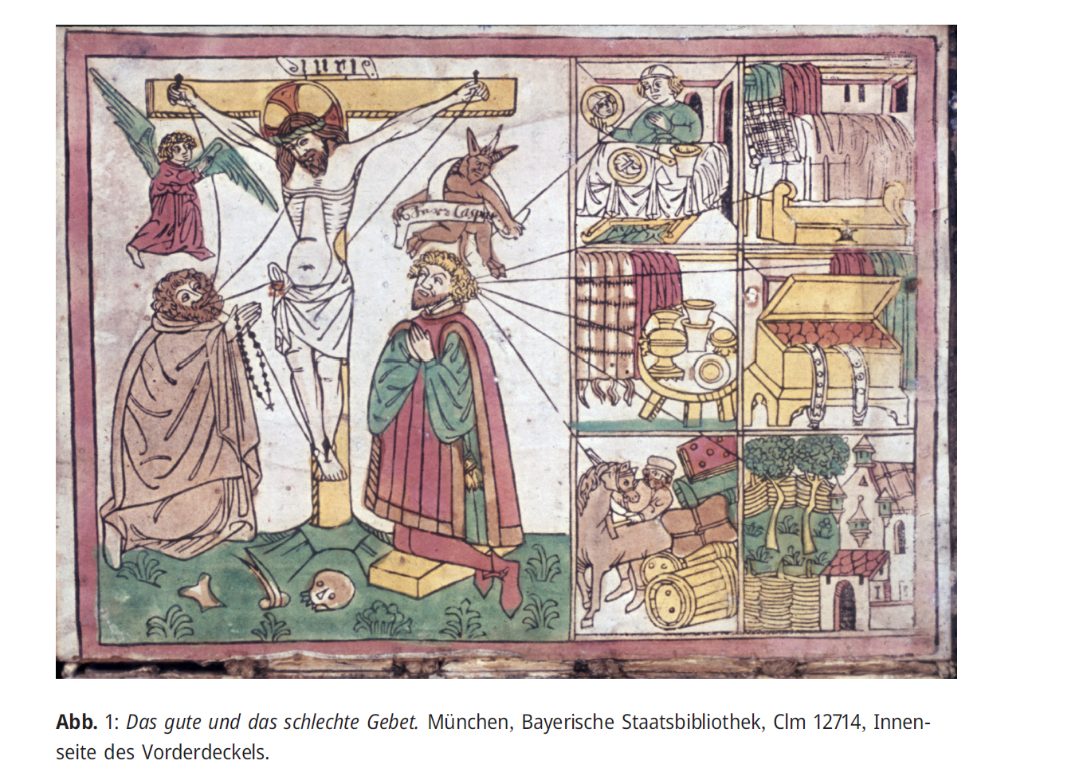
The first session, led by Vassilis Vavoulis, opened with a terminological introduction to the figures and rhetorical devices employed in both poetry and prayer. The following discussion, led by Lukas Bickel (University of Zurich), encompassed excerpts from the treatise “De virtute orandi” (“On the Power/Virtue of Prayer”), attributed to Hugh of Saint Victor (d. 1141), specifically those sections concerning the functions of prayer (supplicatio, postulatio, insinuatio). We focused on Hugh’s approach to the immersive dynamics of prayer and also touched upon the medieval allegory of good and bad prayer.
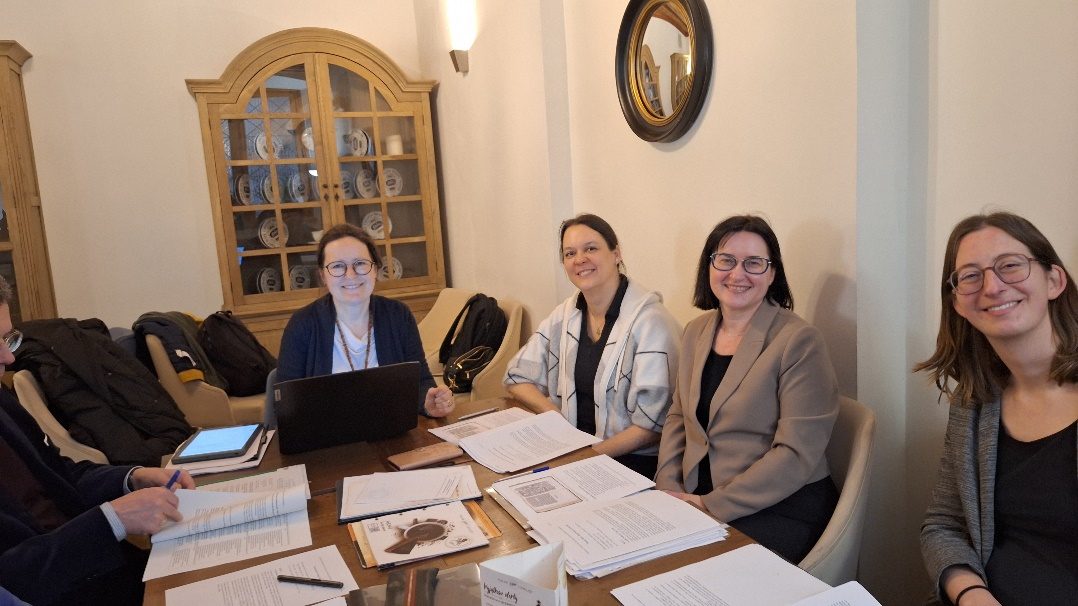
The second session focused on prayers addressed to God the Father and His Son. The first text, selected by Diana Denissen (University of Lausanne), was “The Wohunge of Ure Lauered” (“The Wooing of Our Lord”), a thirteenth-century (c. 1225) prayer in Middle English, which belongs to the so-called “Wooing Group”, a collection of texts centered on the theme of “wooing” Christ. Subsequent works, selected for examination by Michael Lebzelter (University of Stuttgart), and Sorin Bora (University of Craiova), included different versions and translations of the Lord’s Prayer into languages, such as Slavo-Romanian.
The third session, Praying to Mary, began with an exploration of Petrarch’s canzone to the Virgin and its Petrarchist tradition. Together with Marc Föcking (Univerity of Hamburg), we discussed how Petrarch transforms Dante’s prayer to the Virgin Mary into a love poem/love prayer to the Virgin Mary, thus integrating the love discourse of his Canzoniere into a prayer. From Italian we moved to English poetry to consider Geoffrey Chaucer’s An ABC, one of Chaucer’s earliest compositions and his only completely religious poem, addressed to Virgin Mary. We focused on the various religious texts and traditions underlying the poet’s invocations to Mary, the variety of which accounts for the abecedarian or all-encompassing character of this prayer-poem.
The final session was devoted to sixteenth-century prayers. Together with Halszka Leleń (University of Warmia and Mazury in Olsztyn), we discussed Thomas More’s prison prayers, exploring how the imminence of death shapes More’s voice, stance, and contact with the prayer/poem’s multiple addressees – Lord God and his other groups of readers. The closing discussion, led by Maja Matasović (University of Zagreb), concerned the Epic De Vita Et Gestis Christi by Jakov Bunić, a Croatian Renaissance poet. We were interested in the dedicatory poems found between the books, addressed to God the Father, God the Son, God the Holy Spirit, and to the Virgin Mary, and in how their Roman verses and imagery influence the Christian experience of the poem/prayer.
Further reading
Bugliani Knox, Francesca, and J. F. Took (eds.). Poetry and Prayer: The Power of the Word II. Farnham Surrey, England; Burlington, VT: Ashgate, 2015.
FitzGerald, William. Spiritual Modalities: Prayer as Rhetoric and Performance. University Park, Penn.: Pennsylvania State University Press, 2012.
Föcking, Marc: “Padre del ciel! Lyrik und Gebet im italienischen 16. und frühen 17. Jahrhundert.” In: Johann Anselm Steiger (Hg.): Das Gebet in den Konfessionen und Medien der Frühen Neuzeit. Leipzig: Evangelische Verlagsanstalt 2018 (Theologie – Kultur – Hermeneutik 25), 117–139.